| |
|
|
|
|
|
| |
1 - |
Giza Pyramids & Sphinx / The Egyptian Museum
|
|
| |
|
Giza Pyramids: They are the only present-day survivors of the Seven Wonders of the Ancient World. We will start with the Great Pyramid of Khufu where we will have about 45 minute stop, then we will see the other two Pyramids of Khafre and Menkaure. After that we will drive down to Sphinx. It's a one block carved statue of limestone for King Khafre representing him as a sitting lion with human head. Just next to Sphinx we will see the Valley Temple of King Khafre. It's a small temple built of the red granite stone of Aswan. Egyptologists believe that this temple was the mummification place of the royal body.
The Solar Boat Museum (Optional visit): Just behind the Great Pyramid of King Khufu, there is a small boat- shape museum in which you will see a large wooden boat belongs to King Khufu himself. It's one of five boats were buried around his Pyramid for the afterlife. To visit that museum an extra ticket is required of 40 EGP.
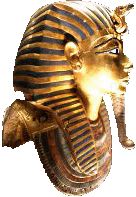
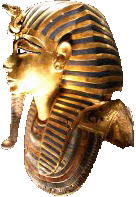
The Egyptian Museum of Antiquities: It was open in 1902. It houses the world’s greatest collection of Ancient Egyptian artifacts, including the golden treasures of the famous boy-king Tut Ankh Amun.
|
|
| |
| |
2 - |
Saqarra / Memphis / Giza Pyramids & Sphinx |
|
| |
|
Saqarra: Saqarra is a very large open air desert area, and there is a lot of walk. It's about one hour driving from Cairo and about half hour driving from Giza Pyramids. Saqarra is located in a country area so you will have a good chance to enjoy the modern Egyptian country side where you will learn about the local customs and traditions of Egyptian peasants. Saqarra is a very rich archaeological necropolis where you will see the Funeral Complex of King Zoser including his Step-Pyramid; the oldest pyramid in Egypt. At Saqarra also you will see one or more (depending on time) of the Nobles' tombs. It shows the beauty and excellence of Ancient Egyptian art on their walls and gives an insight into the daily life of Ancient Egypt. The walls of these tombs are covered by beautiful scenes in colored high relief of the daily life of ancient Egyptians.
Pyramid of Teti: The last thing you will see in Saqarra is the Pyramid of King Teti (6th Dynast, 23rd c. B.C). It's a small pyramid of limestone in a very bad condition, looks like a shapeless mound of rubble. Despite the fact that the pyramid itself looks in bad shape and not very attractive to go into but when you go inside it you will be surprised by its marvelous decorations. The inner chambers walls are covered by beautiful hieroglyphic inscription written in vertical columns, these are the famous religious texts known as the Pyramids Texts.
Memphis: It's an open-air museum built on the ruins of the ancient City of Memphis, the oldest capital city in ancient Egypt (3100 B.C). There you will see a big collection of antiques especially the Colossal of King Ramsses II, carved of one block of limestone weighing about 80 tons and measuring about 12 m high. Also you will see the famous Alabaster Sphinx of Memphis, in addition to many other monuments. Memphis is about 12 minutes driving from Saqarra, and the visit lasts just half hour. |
|
| |
|
Giza Pyramids: They are the only present-day survivors of the Seven Wonders of the Ancient World. We will start with the Great Pyramid of Khufu where we will have about 45 minute stop, then we will see the other two Pyramids of Khafre and Menkaure. After that we will drive down to Sphinx. It's a one block carved statue of limestone for King Khafre representing him as a sitting lion with human head. Just next to Sphinx we will see the Valley Temple of King Khafre. It's a small temple built of the red granite stone of Aswan. Egyptologists believe that this temple was the mummification place of the royal body.
The Solar Boat Museum (Optional visit): Just behind the Great Pyramid of King Khufu, there is a small boat- shape museum in which you will see a large wooden boat belongs to King Khufu himself. It's one of five boats were buried around his Pyramid for the afterlife. To visit that museum an extra ticket is required of 40 EGP.
|
|
| |
3- |
Saqarra / Memphis / Dahshour |
|
| |
|
Saqarra: Saqarra is a very large open air desert area, and there is a lot of walk. It's about one hour driving from Cairo and about half hour driving from Giza Pyramids. Saqarra is located in a country area so you will have a good chance to enjoy the modern Egyptian country side where you will learn about the local customs and traditions of Egyptian peasants. Saqarra is a very rich archaeological necropolis where you will see the Funeral Complex of King Zoser including his Step-Pyramid; the oldest pyramid in Egypt. At Saqarra also you will see one or more (depending on time) of the Nobles' tombs. It shows the beauty and excellence of Ancient Egyptian art on their walls and gives an insight into the daily life of Ancient Egypt. The walls of these tombs are covered by beautiful scenes in colored high relief of the daily life of ancient Egyptians.
Pyramid of Teti: The last thing you will see in Saqarra is the Pyramid of King Teti (6th Dynast, 23rd c. B.C). It's a small pyramid of limestone in a very bad condition, looks like a shapeless mound of rubble. Despite the fact that the pyramid itself looks in bad shape and not very attractive to go into but when you go inside it you will be surprised by its marvelous decorations. The inner chambers walls are covered by beautiful hieroglyphic inscription written in vertical columns, these are the famous religious texts known as the Pyramids Texts.
Memphis: It's an open-air museum built on the ruins of the ancient City of Memphis, the oldest capital city in ancient Egypt (3100 B.C). There you will see a big collection of antiques especially the Colossal of King Ramsses II, carved of one block of limestone weighing about 80 tons and measuring about 12 m high. Also you will see the famous Alabaster Sphinx of Memphis, in addition to many other monuments. Memphis is about 12 minutes driving from Saqarra, and the visit lasts just half hour. |
|
| |
|
Dahshour: It is a large open-air desert area like Saqarra and also was a royal necropolis in ancient time. There you will see the two pyramids of king Senefru, the Bent Pyramid and the Red Pyramid the red one is considered the first true pyramid built in ancient Egypt. The two Pyramids are in very good condition and the Red one is open for the visitors and you can go into it. Dahshour is about 20 minutes driving from Saqarra. |
|
| |
|
|
|
|
|
| |
4- |
The Egyptian Museum / The Citadel & Mohamed Ali Mosque / Khan El-Khalili Bazaar or Coptic Cairo (Old Cairo) |
|
| |
|
The Egyptian Museum of Antiquities: It was open in 1902. It houses the world’s greatest collection of Ancient Egyptian artifacts, including the golden treasures of the famous boy-king Tut Ankh Amun. |
|
| |
|
The Citadel: It's one of Cairo's most popular tourist attractions. The Citadel is an old fortress originally built by Salah El-Din (Saladin) in 1176 to fortify the city against the Crusaders. It's a complex which houses a number of museums, mosques and other sites, located on a spur of limestone that had been detached from its parent Moqattam Hills by quarrying. The most famous mosque to be visited at the Citadel is the Alabaster Mosque of Mohamed Ali the Great, built in 1830. |
|
| |
|
Khan El-Khalili Bazaar: reputed to be the largest bazaar (market) in the Middle East. The bazaar has now grown to vast proportions. As you wander through the labyrinth of narrow streets you will find workshops and stalls selling all manner of things from woodwork, glassware and leather goods to perfumes, fabrics and Pharaonic curiosities. |
|
| |
|
Coptic Cairo or Old Cairo: it's called Coptic Cairo because there are many old Coptic Churches there and it's called Old Cairo because it's the oldest part of Cairo dates back to the 7th c. A.D.
In Coptic Cairo you will visit 2 ancient Coptic churches, a synagogue, the ruined Roman fortress of Babylon and the Coptic museum.
- The Hanging Church
- The Church of St. Sergius
- The Synagogue of Ben Ezra
- The Roman fortress of Babylon
- The Coptic Museum (optional visit)
|
|
| |
5- |
City of the dead / The Citadel & Mohamed Ali Mosque / Coptic Cairo (Old Cairo) / Khan El-Khalili Bazaar |
|
| |
|
|
|
| |
|
City of the dead: It's a very large Islamic cemetery dates back to the 10th c. A.D. There you will visit some Royal tombs attached to mosques. Also you will have a panoramic view of the whole of the cemetery where you will distinguish between 3 levels of tombs, royals, nobles and common people tombs. |
|
| |
|
The Citadel: It's one of Cairo's most popular tourist attractions. The Citadel is an old fortress originally built by Salah El-Din (Saladin) in 1176 to fortify the city against the Crusaders. It's a complex which houses a number of museums, mosques and other sites, located on a spur of limestone that had been detached from its parent Moqattam Hills by quarrying. The most famous mosque to be visited at the Citadel is the Alabaster Mosque of Mohamed Ali the Great, built in 1830. |
|
| |
|
Khan El-Khalili Bazaar: reputed to be the largest bazaar (market) in the Middle East. The bazaar has now grown to vast proportions. As you wander through the labyrinth of narrow streets you will find workshops and stalls selling all manner of things from woodwork, glassware and leather goods to perfumes, fabrics and Pharaonic curiosities. |
|
| |
|
Coptic Cairo or Old Cairo: it's called Coptic Cairo because there are many old Coptic Churches there and it's called Old Cairo because it's the oldest part of Cairo dates back to the 7th c. A.D.
In Coptic Cairo you will visit 2 ancient Coptic churches, a synagogue, the ruined Roman fortress of Babylon and the Coptic museum.
- The Hanging Church
- The Church of St. Sergius
- The Synagogue of Ben Ezra
- The Roman fortress of Babylon
- The Coptic Museum (optional visit)
|
|
| |
|
The Pharaonic Village: is a small village built on a small island on the Nile in Giza District. Just a few miles from the center of Cairo is a time machine waiting to take you on a fantastic journey to the days of the Pharaohs, a time brought to life by an incredible group of actors and actresses, faithful and exact reproductions of buildings, clothing, and life style. At the Pharaonic Village visitors sail on comfortable motorized barges down a network of canals and view incredibly accurate tableaux of the recreation of ancient Egyptian life. Sights include recreations of industries, games, arts, and moments from history and legend. |
|
| |
|
|
|
| |
8- |
Islamic Cairo |
|
| |
|
|
|
| |
|
a) The Citadel & Mohamed Ali Mosque / City of the dead / Ahmed Ibn Tulun Mosque/ Gayer Anderson Museum or House/ Khan El-Khalili Bazaar |
|
| |
|
The Citadel: It's one of Cairo's most popular tourist attractions. The Citadel is an old fortress originally built by Salah El-Din (Saladin) in 1176 to fortify the city against the Crusaders. It's a complex which houses a number of museums, mosques and other sites, located on a spur of limestone that had been detached from its parent Moqattam Hills by quarrying. The most famous mosque to be visited at the Citadel is the Alabaster Mosque of Mohamed Ali the Great, built in 1830. |
|
| |
|
City of the dead: It's a very large Islamic cemetery dates back to the 10th c. A.D. There you will visit some Royal tombs attached to mosques. Also you will have a panoramic view of the whole of the cemetery where you will distinguish between 3 levels of tombs, royals, nobles and common people tombs. |
|
| |
|
Ibn Tulun Mosque: This mosque is considered to be the oldest intact mosque in Egypt. It was built by Ahmed Ibn Tulun, a Turkish-origin governor of Egypt (868-905 AD). It was the third congregational mosque to be built in Cairo and the third largest mosque in the world. It's approximately 26,318 square meters in size. This mosque is very unique in its architectural details because it reflects all the characteristic features of Abbasid art of Iraq, and was obviously influenced, particularly with regards to the minaret, the great rectangular piers with engaged corner columns, the decorative motif and other features by the famous Samara mosque in present day Iraq. |
|
| |
|
|
|
| |
|
Gayer Anderson Museum or House:
The Gayer-Anderson Museum or House is actually made up of two 17th century houses stuck together. They are of Islamic architectural design and the majority of their halls and rooms are furnished with Islamic design furniture.. This complex is named after a British major who lived in it and restored it earlier in the 20th century. He filled the house with French, English and Oriental furniture and other fixtures. The house is a good example of upper class medieval Cairene tastes. The house is located in the southeast corner of the Ibn Tulun Mosque. |
|
| |
|
Khan El-Khalili Bazaar: reputed to be the largest bazaar (market) in the Middle East. The bazaar has now grown to vast proportions. As you wander through the labyrinth of narrow streets you will find workshops and stalls selling all manner of things from woodwork, glassware and leather goods to perfumes, fabrics and Pharaonic curiosities. |
|
| |
|
|
|
| |
|
b)The Citadel & Mohamed Ali Mosque / City of the Dead / El-Sultan Hassan Mosque/ El-Refaai Mosque /Khan El-Khalili Bazaar |
|
| |
|
|
|
| |
|
The Citadel: It's one of Cairo's most popular tourist attractions. The Citadel is an old fortress originally built by Salah El-Din (Saladin) in 1176 to fortify the city against the Crusaders. It's a complex which houses a number of museums, mosques and other sites, located on a spur of limestone that had been detached from its parent Moqattam Hills by quarrying. The most famous mosque to be visited at the Citadel is the Alabaster Mosque of Mohamed Ali the Great, built in 1830. |
|
| |
|
City of the dead: It's a very large Islamic cemetery dates back to the 10th c. A.D. There you will visit some Royal tombs attached to mosques. Also you will have a panoramic view of the whole of the cemetery where you will distinguish between 3 levels of tombs, royals, nobles and common people tombs. |
|
| |
|
|
|
| |
|
|
|
| |
|
|
| |
|
|
|
| |
|
|
|
| |
|
|
|
| |
|
|
|
| |
|
|
|
| |
|
|
|
| |
|
|
|
| |
8- |
Islamic Cairo |
|
| |
|
|
|
| |
|
|
|
| |
|
b) The Citadel & Mohamed Ali Mosque / City of the Dead / El-Sultan Hassan Mosque/ El-Refaai Mosque /Khan El-Khalili Bazaar |
|
| |
|
|
|
| |
|
c) Fatimid Cairo: The old gates of Cairo: Bab el Futuh, Bab en Nasr and Bab Zewella/Al Azhar Mosque/ Beit El Sehemi/ Khan El-Khalili Bazaar / El Khayameya Street (Tent maker workshops) |
|
| |
|
|
|
| |
9- |
Felucca on the Nile / Shopping at Arcadia Mall / Khan El-Khalili Bazaar |
|
| |
|
|
|
| |
10- |
Cairo Tower/ Horse Carriage / Felucca on the Nile |
|
| |
|
|
|
| |
|
|
|
| |
|

|
|
| |
|
|
|